Month: February 2015

  • Chinese Numismatic Charms Museum

    The Chinese Numismatic Charms Museum (中国古代民俗钱币博物馆), China’s first museum dedicated specifically to ancient Chinese charms, officially opened on February 1, 2015 in Haikou (海口市), Hainan  Province (海南省).
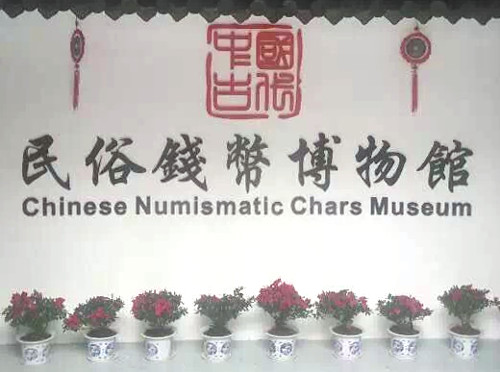
    The Chinese Numismatic Charms Museum iThe Chinese Numismatic Charms Museum is China's first museum dedicated to ancient Chinese charmss China's first museum dedicated to ancient Chinese charms
    The Chinese Numismatic Charms Museum is China’s first museum dedicated to ancient Chinese charms

    The museum is located in Movie Town which is a movie-themed town built to resemble the city of Chongqing (重庆市) as it existed in the year 1942.

    Chongqing was the provisional capital of the Republic of China during World War II (Second Sino-Japanese War 1937-1945 抗日战争).
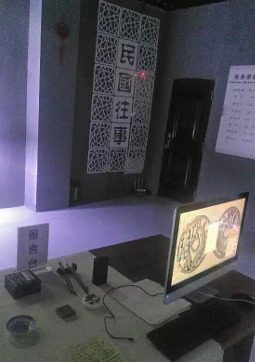
    Digital displays of Chinese charms at the museum
    Digital displays of Chinese charms at the museum

    In keeping with the theme, the museum is located in a three-story building on 1942 Street (1942民国街) built to l0ok like the Szechuan Kanting Civilian Commercial Bank (chuan kang ping min shang ye yin hang 川康平民商业银行) that existed in Chongqing in 1942.

    The Szechuan Kanting Civilian Commercial Bank was established in September 1937 through the merger of the Cultivation Bank of Ch’uan K’ang (chuan kang zhi ye yin hang 川康殖业银行), the People’s Bank of Chungking (chong qing ping min yin hang 重庆平民银行) and the Szechuan Commercial Bank (si chuan shang ye yin hang 四川商业银行).

    The bank, however, served as more than just a bank.

    With the Mukden Incident of 1931 (九·一八事变), the fear was that the Japanese would invade and occupy Beijing.

    To prevent the possibility of the Japanese looting the nation’s art treasures and cultural heritage at the Forbidden City (Palace Museum 故宫博物院), more than 600,000 of the most precious artifacts were packed into many thousands of crates and secretly transported to Nanjing.

    The Marco Polo Bridge Incident of 1937 (七·七事变) was the pretext for Japan launching a full invasion of China.  The national treasures were moved again.

    Because the Szechuan Kanting Civilian Commercial Bank in Chongqing had a very secure second floor warehouse, a portion of these national treasures were stored there for safekeeping.

    The national treasures remained well-protected at the bank and survived the war even during the extensive Japanese bombing of Chongqing which began in 1938.

    It is fitting, therefore, that the new Chinese Numismatic Charms Museum is located in a replica of this bank.

    The museum has exhibition areas covering more than 530 square meters.

    The first floor exhibit is entitled the “Republican Past” (民国往事).  The second floor has “Legacy of the Ancient Sea” (古海遗珍) as its theme.

    The third floor will be a multimedia exhibition hall.
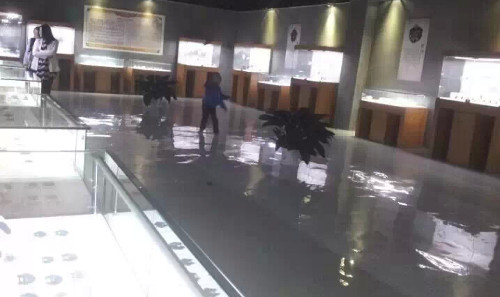
    An exhibition room displaying old Chinese charms
    An exhibition room displaying old Chinese charms

    The museum is the first in China to specialize in the display of old Chinese lock and pendant charms.  Some of the museum’s collection of these types of charms can be seen in the display cases in the above image.
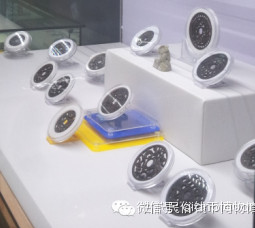
    A display case with part of the museum's extensive collection of open work charms
    A display case with part of the museum’s extensive collection of open work charms

    The museum also has a large collection of ancient Chinese open work charms.

    Several of the open work charms may be seen in the image to the left.

    The museum has on display more than 2,000 Chinese charms from the Han Dynasty (206 BC – 220 AD) to the Republican Period (1912-1949).

    Also on exhibit are silver coins and paper money from the later years.

    Admission to the museum is free to the public.
  • Horse in Armour Horse Coins

    Horse coins (ma qian 马钱) originated in China during the Song Dynasty (宋朝 960 – 1279).  They were not used as money, however, but as game pieces.

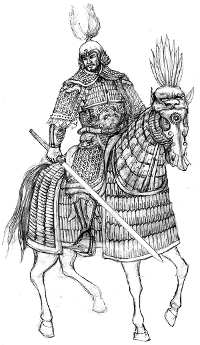
    Illustration of horse armour from the Song Dynasty
    Illustration of horse armour from the Song Dynasty

    There are a great variety of horse coins.  Some display only a horse while others show both a horse and rider.

    Some horse coins have inscriptions which identify the horse or rider.

    The horses were famous for their speed and endurance.

    Some are referred to as a “thousand-li horse” (qian li ma 千里马) which means the horse could travel 1,000 li (里), or about 400 km, in a single day.

    Even though the Chinese began using armour for their war horses as early as the end of the Han Dynasty (汉朝 206 BC – 220 AD), very few horse coins depict a horse wearing armour.

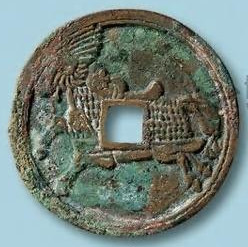
    Horse coin displaying horse armour used by the Chinese during the Song Dynasty
    Horse coin displaying horse armour used by the Chinese during the Song Dynasty

    At the left is a rare example of a horse coin with the horse wearing the type of armour (铠甲马) used by the Chinese during the Song Dynasty.

    The horse is shown in a full gallop.

    Another distinctive feature of this Song Dynasty horse coin is that it shows the saddle.  Very few horse coins display the saddle due to the placement of the square hole in the middle.

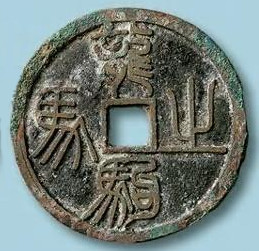
    "Dragon's Colt" horse coin from the Song Dynasty
    “Dragon’s Colt” horse coin from the Song Dynasty

    The obverse side of this horse coin is particularly attractive because the inscription is written in seal script (zhuan shu 篆书).

    The inscription reads long ju zhi ma (龙驹之马) which translates as “Dragon’s Colt”.

    Dragon’s Colt was one of the famous horses owned by Emperor Wen (202 – 172 BC) of the Han Dynasty.

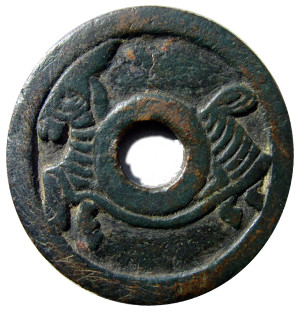
    Horse coin depicting horse armour used by the Mongols during the Yuan Dynasty
    Horse coin depicting horse armour used by the Mongols during the Yuan Dynasty

    At the left is a very rare horse coin that recently appeared in a Chinese coin forum.

    The horse coin is identified as being from the Yuan Dynasty (元朝 1271 – 1368).  The Yuan Dynasty followed the Song Dynasty.

    The Yuan Dynasty was ruled by the Mongols and was founded by Kublai Khan (元世祖).

    The Mongols rode horses wearing battle armour during military campaigns which helped them to create the largest contiguous land empire in history.  The Mongol Empire (1206 – 1368), under the leadership of Genghis Khan (成吉思汗), stretched from central Europe to China.

    This horse coin displays a horse in full gallop wearing the armour typically used by the Mongols.

    Unlike the Song Dynasty horse coin shown above, this coin’s hole is round instead of square.  The hole, unfortunately, prevents us from viewing the saddle.

    As best as can be determined, this Yuan Dynasty horse coin does not appear in any Chinese numismatic reference book.

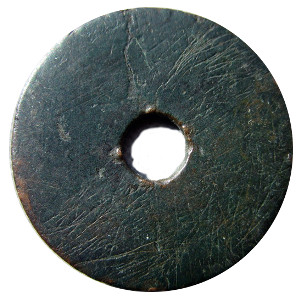
    Reverse side of armored horse coin from the Yuan Dynasty
    Reverse side of armoured horse coin from the Yuan Dynasty

    The reverse side of the horse coin is shown at the left.  It is flat with no inscription.

    This is in contrast to Song Dynasty horse coins which almost always have an inscription or design on the reverse side.

    As already mentioned, these two horse coins are most unusual.

    Very few Song Dynasty horse coins display a horse wearing battle armour and it is rare to find any horse coin from that period which also shows the saddle.

    Horse coins dating from the Yuan Dynasty, particularly ones displaying horse armour, are even rarer and have yet to be properly researched.